MYIO
- 4.7
- Rating
- 100.00K
- Installs
- Free
- Price

 Analysis by App-foxy
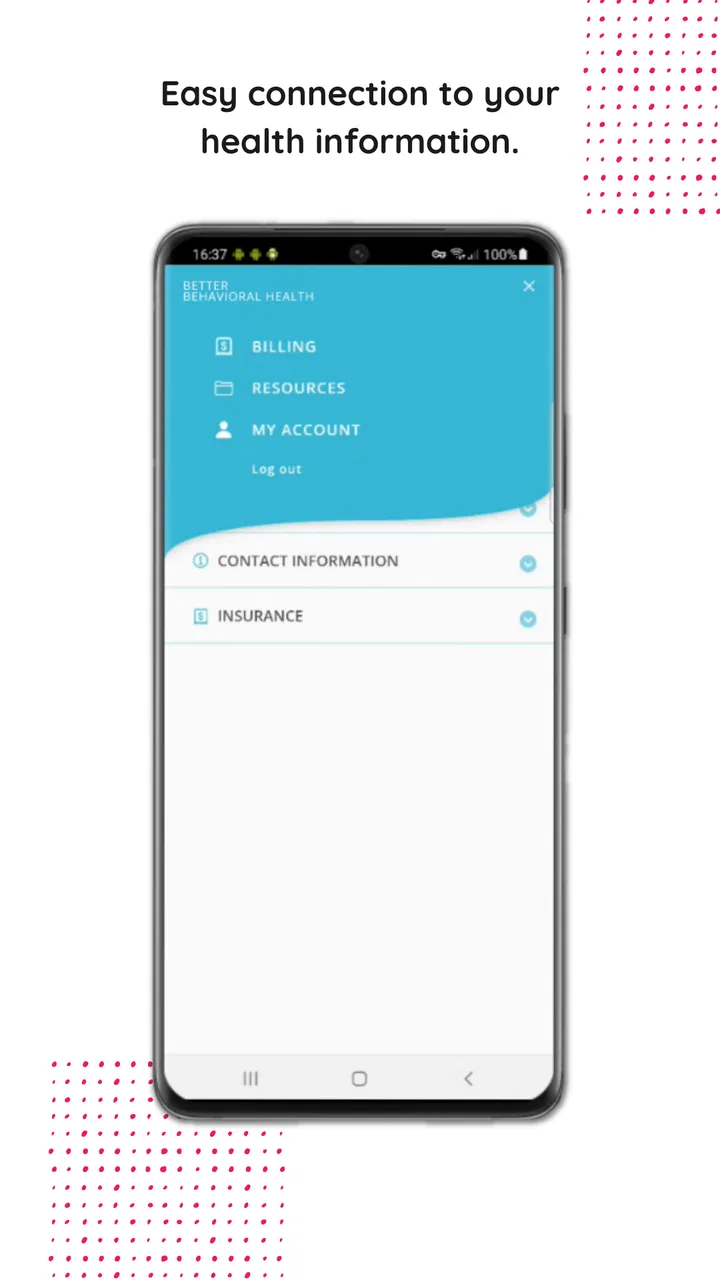
MYIO is a medical app from Valant built around behavioral health access, and my overall impression is that it works best as a companion to an existing care relationship rather than as a general wellness tool. Its store summary calls it a Behavioral Health Portal, which is a useful way to set expectations: this is not the sort of app I would open for meditation ideas, symptom searches, or broad self-help content. Its value is more practical and personal, especially when a clinic or behavioral health provider already uses Valant’s system.
I found the appeal easy to understand. Keeping care-related tasks in one place can remove some of the small obstacles that make appointments and follow-up feel harder than they should. At the same time, the app’s usefulness depends heavily on the organization behind it. That is the central point I would keep in mind before installing it: MYIO is strongest when it is part of a provider’s workflow, not when it is treated as a standalone mental health service.
How MYIO fits into everyday behavioral health care
The app is listed as free, carries an Everyone content rating, and supports devices running Android 6.0 or later. Those details make it approachable for a wide range of users, including people who may not have a newer phone. The developer is Valant, a company associated with behavioral health practice software, so the app’s identity feels more like a patient-facing doorway into care than an independent consumer product.
You May Also Like

 Blood Strike: 2.5 Anniversary
Blood Strike’s Loadouts Turn Every Drop Into a Tactical Gamble
A close look at Blood Strike’s custom loadouts: how fast access to signature weapons reshapes its battle royale rhythm, rewards preparation, and narrows the gap between fights.

 Pandora - Music & Podcasts
Pandora’s Music Is Easy to Start, but Harder to Recover
Pandora’s strength is its low-effort path from a seed to a station. Its weak spot is how much confidence it asks you to place in connection, setup, and quiet recovery.

 8 Ball Pool
 Is Built on Rivalries, Rematches, and Routine
A close look at the rivalries, rematches, shared routines, and unanswered safety questions that turn a quick pool match into a persistent mobile community.

 Samsung Music
’s Quiet Strength Is Playing What You Already Own
Its reach comes less from spectacle than from dependable access to a personal library. That simplicity is both the app’s strongest retention engine and its ceiling.

 AccuWeather: Weather Radar
AccuWeather Review: A Quick, Clear Forecast for Everyday Decisions
For everyday plans, the best forecast is the one you can understand quickly. AccuWeather makes rain timing, radar, and local conditions easy to act on, with a few trade-offs.

 Hill Climb Racing
Why Hill Climb Racing Still Turns Crashes Into One More Run
A tiny car, a bumpy hill and one more upgrade: Hill Climb Racing keeps resurfacing because its simple chaos makes every near-miss feel personal.
More From Our News Desk
View All News


That distinction matters. Many health apps try to keep you engaged with articles, exercises, reminders, dashboards, or tracking tools. MYIO has a narrower purpose. I would expect a person to use it because their behavioral health provider directs them there, not because they are browsing an app store looking for something to improve their mood. The narrower focus is a strength when you need care-related access, but it also means the app may feel limited if you want a large library of self-guided material.
A realistic example is a busy weekday when an appointment is approaching and you do not want to search through old messages, paper notes, or a separate calendar entry. A portal-style app can make that process feel more contained. I would use it as a regular checkpoint: open it when I need to review what my care team has made available, deal with an administrative task, or prepare for the next interaction. That is a much more sensible routine than checking it repeatedly throughout the day.
There is also a useful emotional advantage to this kind of focused design. Behavioral health care can already involve a lot of mental effort. A dedicated portal may reduce the need to remember which website, email thread, or phone number handles a particular task. It does not solve every access problem, but it can make the practical side of treatment less scattered.
The strongest reason to choose it
The most convincing part of MYIO is the connection between the app and an established provider relationship. When a clinic has adopted the platform, the app can become a familiar place for care-related communication and organization. I see that as more valuable than the app’s basic download count or store presence, because the real test is whether it helps a person stay connected to the service they are already receiving.
The app has earned a 4.8 average from around 3.6 thousand ratings, with close to five hundred written reviews. That is a positive public signal, although I would not treat it as a guarantee that every patient will have the same experience. Portal apps are affected by the clinic’s setup, the way staff use them, and the kind of access a particular patient receives. A smooth experience for one provider’s patients may not translate perfectly to another setting.
Its reach is also substantial, with over one hundred thousand installs. That suggests MYIO is not an experimental side project with no real audience. Still, popularity should be interpreted carefully here. People generally install a medical portal because they need to interact with a specific service, so the number of installations says less about standalone appeal than it would for a game or social app.
One practical tip is to install it before you urgently need it. If your provider has already invited you to use MYIO, setting it up during a calm moment gives you time to understand the layout and sign-in process. That is especially worthwhile before a first appointment, a medication discussion, or a period when you expect to communicate with your care team. Discovering a portal for the first time while stressed is rarely ideal.
Where the focused design helps
I like that a behavioral health portal does not need to compete with the endless stream of unrelated notifications found in general wellness apps. A person who is already managing appointments or treatment can benefit from a tool that stays close to that purpose. It is easier to understand why you are opening it, and there is less temptation to confuse entertainment, self-help content, and professional care.
That focus can also support better preparation. Before using a portal, I would keep a short note on my phone with questions, changes in symptoms, concerns about treatment, or practical issues I want to raise. Then I could use MYIO as the place for the care-related part of that process, while keeping personal reflections separate. This is a small but useful boundary: the app can support an appointment without becoming the only record of how I feel.
Another non-obvious benefit is continuity. When care is spread across phone calls, printed paperwork, and different web pages, it is easy to lose track of what happened last. A dedicated portal gives the patient a more recognizable starting point. Even if I still needed to contact the provider directly for urgent matters, I would appreciate having one place to check first for ordinary care-related tasks.
That said, I would not assume every action is available in every clinic account. The experience is likely to reflect what the provider has enabled and how the practice handles its patient portal. If you install the app and see a sparse or restricted view, that may be a sign to ask the clinic what they support rather than immediately concluding that the app is broken.
The limitation that changes the recommendation
MYIO is not the right choice for someone looking for immediate crisis help, diagnosis, or a substitute for a therapist or psychiatrist. A portal can support an existing care process, but it should not be treated as an emergency channel simply because it sits on a phone. If there is an immediate danger, I would use local emergency services or a recognized crisis resource instead of waiting for a portal response.
The same limitation applies to people who want a complete mental health program without a provider. MYIO’s portal identity makes it less suitable for someone hoping to start with mood tracking, guided exercises, educational courses, or anonymous peer support. A dedicated self-help app may be a better fit for those goals, while a telehealth service may be preferable for someone actively searching for a new clinician.
I also see a possible friction point in dependence on the provider. If your clinic rarely updates the portal, prefers phone calls, or does not use the app for the tasks you care about, MYIO may not become part of your routine. No patient-facing interface can compensate for a practice that does not maintain a responsive workflow behind it. This is why I would ask the provider a few direct questions before relying on it: What will I be able to do here? How quickly are messages handled? Which situations still require a phone call?
Those questions are more useful than simply asking whether the app is “good.” A portal is a bridge, and the quality of the bridge depends on both sides. The app can be well designed and still feel unhelpful if the organization does not use it consistently.
Privacy-minded habits and practical use
Because this is a medical application, I would treat the phone itself as part of the privacy picture. I would use a screen lock, avoid leaving the app open in public, and be cautious about showing notifications on a shared lock screen. These are ordinary device habits, but they matter more when an app may contain sensitive behavioral health information.
I would also avoid using MYIO as a personal diary unless the provider specifically explains how any notes or messages are handled. A short, clear message about a care question is usually more useful than a long stream of unstructured thoughts. Before sending anything, I would reread it and make sure it says what I need, what changed, and what response I am seeking. That approach can make communication easier for both the patient and the care team.
A second useful habit is to separate routine and urgent needs. Routine questions belong in the normal provider workflow, while urgent concerns should go through the appropriate immediate channel. The app should not become a reason to delay help. This may sound obvious, but portal convenience can create false confidence if users assume that every message is seen instantly.
For appointment preparation, I would use a simple three-part note: what has improved, what has become harder, and what I want to decide next. MYIO can then be the access point for the formal care interaction, while the note keeps the conversation focused. This is a more realistic use than expecting the app itself to organize every emotional or medical detail automatically.
Who will get the most from it
I would recommend MYIO first to patients whose behavioral health provider already uses Valant and has clearly invited them into the portal. It is also a sensible option for caregivers or family members who have an authorized role in coordinating care, provided the provider has set up that access appropriately. In those situations, the app’s value comes from reducing friction around an existing relationship.
It may suit people who prefer handling ordinary care tasks digitally rather than making repeated phone calls. It can also help users who want a single, recognizable place to begin when preparing for an appointment. The free price removes one common barrier, and the Everyone rating makes it broadly accessible from an age-label perspective, although the sensitivity of the information still calls for mature privacy habits.
I would be more cautious about recommending it to someone who has not yet found a provider, someone who wants anonymous support, or someone expecting a rich collection of self-guided mental health tools. In those cases, MYIO may feel like an empty doorway because its main purpose begins after a care organization has connected the user to it.
It is also not my first pick for a person who dislikes account-based services or wants everything to work independently of a clinic. A general health journal, calendar, or secure note-taking tool may offer more personal control, while a full telehealth platform may provide a clearer path from searching for care to attending a session. The better option depends on whether the user needs a portal for current treatment or a service for finding treatment.
How it compares with familiar alternatives
Compared with a generic calendar, MYIO is potentially more relevant to behavioral health because it is tied to the care relationship rather than only recording an appointment time. A calendar can remind me where I need to be, but it cannot replace the provider-facing context of a medical portal. On the other hand, a calendar is often faster for simple reminders and does not depend on a clinic’s participation.
Compared with a general wellness app, MYIO is less broad but more grounded in professional care. Wellness apps may offer breathing exercises, habit streaks, mood prompts, or educational material. Those can be useful for self-directed routines, but they do not serve the same purpose as a provider portal. I would choose MYIO when my priority is staying connected to treatment, not when I want content to browse every day.
Compared with a telehealth marketplace, it occupies a different stage of the journey. A marketplace helps people discover clinicians or arrange a new service. MYIO makes more sense once a provider relationship already exists. Confusing those roles could lead to disappointment, so I would think of it as the ongoing-care side of the process rather than the search-and-booking side.
The current release is version 1.1.58, which shows that the app has an established version history rather than being presented as a one-off download. I would still keep expectations realistic: version updates do not automatically mean that every clinic workflow is equally polished. The important question is whether the functions your provider promises are available and dependable in your particular account.
My final recommendation
After looking at MYIO as both a medical tool and a daily-use app, I see a clear thesis: it is a useful access layer for behavioral health care, but not a complete mental health solution by itself. Its strongest evidence is the combination of a focused purpose, a strong average rating, and meaningful adoption. Its main weakness is equally clear: the experience depends on the provider relationship and should not be mistaken for immediate or independent clinical support.
If my therapist, psychiatrist, or behavioral health clinic asked me to use it, I would install it and give it a fair trial. I would set it up before an important appointment, use concise messages, keep my device protected, and confirm which situations require a phone call or urgent help. Those habits would let the app do what it is best at without asking it to become something it was not designed to be.
For someone already connected to a participating provider, the free download makes MYIO easy to try, and the app may reduce the everyday friction of managing care. For someone searching for self-help content, crisis support, or a new clinician, I would point elsewhere. My recommendation is positive but specific: choose MYIO when you need a behavioral health portal connected to ongoing care, not when you need a standalone mental wellness app.
FAQs for MYIO
01What is MYIO and what are its main features?
MYIO is a productivity app designed to streamline task management and enhance organization. Key features include customizable to-do lists, calendar integration, and real-time collaboration tools, making it ideal for both personal and team use. Its user-friendly interface ensures that users can easily navigate and manage their daily activities efficiently.
02Is MYIO available for both Android and iOS platforms?
Yes, MYIO is available for download on both Android and iOS platforms. Users can access the app via the Google Play Store for Android devices and the Apple App Store for iOS devices. This cross-platform availability ensures users can seamlessly sync their data across different devices.
03Does MYIO offer any subscription plans or in-app purchases?
MYIO offers a free version with basic features, but to unlock its full potential, users can subscribe to premium plans. These plans offer advanced features such as enhanced collaboration tools, additional storage, and personalized support. In-app purchases are also available for specific add-ons and features.
04How secure is MYIO in terms of data privacy?
MYIO prioritizes user privacy and data security. It employs end-to-end encryption to protect user data and follows industry-standard practices to ensure data safety. The app’s privacy policy is transparent, detailing how user information is handled, making it a reliable choice for security-conscious users.
05Can MYIO be used offline, and does it sync data automatically?
MYIO can be used offline, allowing users to access and manage their tasks without an internet connection. Once the device is back online, the app automatically syncs data across all connected devices, ensuring that users have the most up-to-date information at all times.
Pros
- User-friendly interface for easy navigation.
- Seamless integration with other apps.
- Customizable settings for personalization.
- Regular updates with new features.
- Responsive customer support team.
Cons
- Occasional bugs after updates.
- High battery consumption during use.
- Limited offline functionality.
- Some features behind paywall.
- Notifications can be overwhelming.

MYIO
Gallery